
Subscribe to receive our daily tech reviews
Lorem ipsum dolor sit amet, consectetur adipiscing elit ut liqua purus sit amet luctus venenatis, lectus magna.


Bakmi
Learn the differences between bakmi and other noodles like mie ayam, ramen, chow mein, and kwetiau, including texture, cooking methods, and flavor profiles.
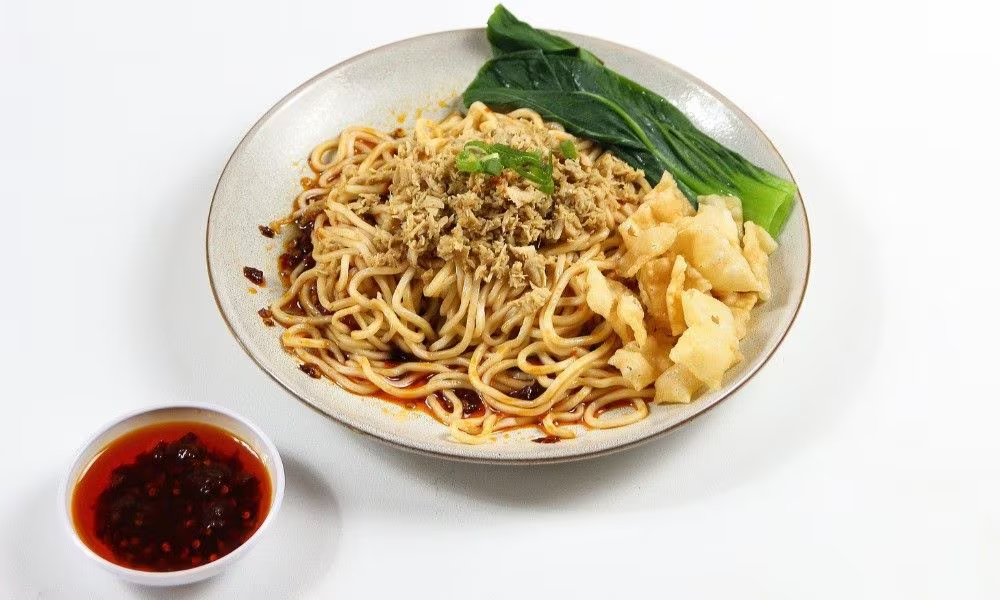
Bakmi is Indonesia’s everyday noodle dish, usually served dry with garlic oil and a bowl of soup on the side. It has Chinese roots but has evolved into a comfort food eaten by everyone, everywhere in Indonesia.
What Is Bakmi?
Bakmi is one of the most common noodle dishes in Indonesia.
It’s made with thin egg noodles, usually served dry, mixed with garlic oil and soy sauce, with a small bowl of soup on the side.
The word bakmi comes from Chinese, but in Indonesia, it’s already its own thing. Almost everyone here grows up eating bakmi — at street stalls, small neighborhood shops, or old family-run places.
A typical bowl of bakmi comes with toppings like:
- chicken
- dumplings (pangsit)
- meatballs
- sometimes pork, depending on the shop
It’s not heavy food. It’s not fancy either. Bakmi is the kind of meal you eat for lunch, late dinner, or when you don’t want to think too much — just something warm and satisfying.
Every bakmi place tastes a bit different. Some are slightly sweet, some more savory, some very light. That’s why Indonesians usually have their own favorite bakmi spot and stick with it for years.
If you want to understand everyday Indonesian food, bakmi is one of the best places to start 🍜
What Makes Indonesian Bakmi Different?
If you’ve eaten noodles in other countries, Indonesian bakmi might feel familiar — but it’s actually quite different.
First thing: most bakmi here is served dry, not in soup.
The noodles are mixed with garlic oil, soy sauce, and seasoning, then the soup comes separately on the side. This is important. It keeps the noodles springy and not soggy.
The noodles themselves are thin egg noodles with a chewy bite. Not as thick as udon, not as soft as ramen. When done properly, they feel light but satisfying.
Flavor-wise, bakmi is simple, not heavy.
You’ll taste garlic, a bit of soy sauce, sometimes a hint of sweetness. It’s not meant to be spicy or oily by default. Chili is usually added later, based on your preference.
Another big difference is how personal bakmi is. Everyone orders it slightly differently:
- dry or soup
- spicy or not
- add dumplings or meatballs
- extra chili, extra garlic, more soy sauce
Two people can order “bakmi ayam” at the same place and end up with different bowls.
Bakmi also adapts a lot to local taste. Some versions are sweeter (bakmi yamin), some are smoky, some are very clean and light. Each shop has its own style, and locals usually have their “favorite bakmi place” they’ve been eating at for years.
At the end of the day, bakmi is not fancy food.
It’s everyday comfort food. Cheap, filling, quick — and that’s exactly why Indonesians love it.
Bakmi Origins: Chinese Roots, Indonesian Soul
Bakmi didn’t start in Indonesia, but it grew up here.
The word bakmi comes from Hokkien Chinese:
- bak means meat
- mi means noodles
Early Chinese migrants brought noodle culture with them when they settled in Indonesia, especially in cities like Jakarta, Semarang, Surabaya, and Medan.
At first, bakmi was very Chinese in style — using pork, lard, and stronger flavors. But over time, it adapted.
Adapting to Indonesia
As Chinese-Indonesian communities lived side by side with locals, bakmi slowly changed:
- pork was replaced with chicken in many places
- lard became garlic oil or vegetable oil
- flavors became lighter and cleaner
- soup was separated instead of mixed into the noodles
This made bakmi more widely accepted, including among Muslim Indonesians.
That’s why today bakmi ayam is far more common than bakmi babi.
Chinese Technique, Local Habit
The technique is still very Chinese:
- boiling noodles quickly
- tossing with oil and seasoning
- keeping the texture springy
But the way Indonesians eat bakmi is very local.
Bakmi is not “restaurant food” here.
It’s daily food. You eat it after work, late at night, or when you don’t want rice.
That’s also why bakmi gerobak became so popular, cheap, fast, and comforting.
Why Bakmi Feels So Indonesian Today
Even though bakmi has Chinese roots, most Indonesians don’t see it as foreign food anymore.
It’s eaten by everyone.
It’s sold everywhere.
It’s part of daily life.
Bakmi is one of the best examples of how Chinese-Indonesian food blended naturally into Indonesian culture — by taste and habit, not by force.
Regional Bakmi Styles in Indonesia
Bakmi in Indonesia doesn’t have one standard taste. Each region has its own style.
Jakarta Bakmi
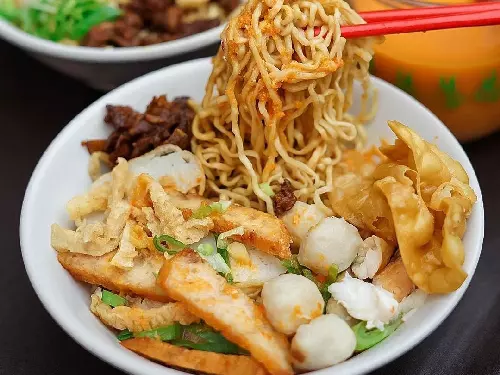
The “classic” bakmi most people know.
- thin egg noodles
- savory garlic oil
- chicken is very common
- dumplings and meatballs as add-ons
Balanced, clean, not too sweet, not too oily.
Medan Bakmi
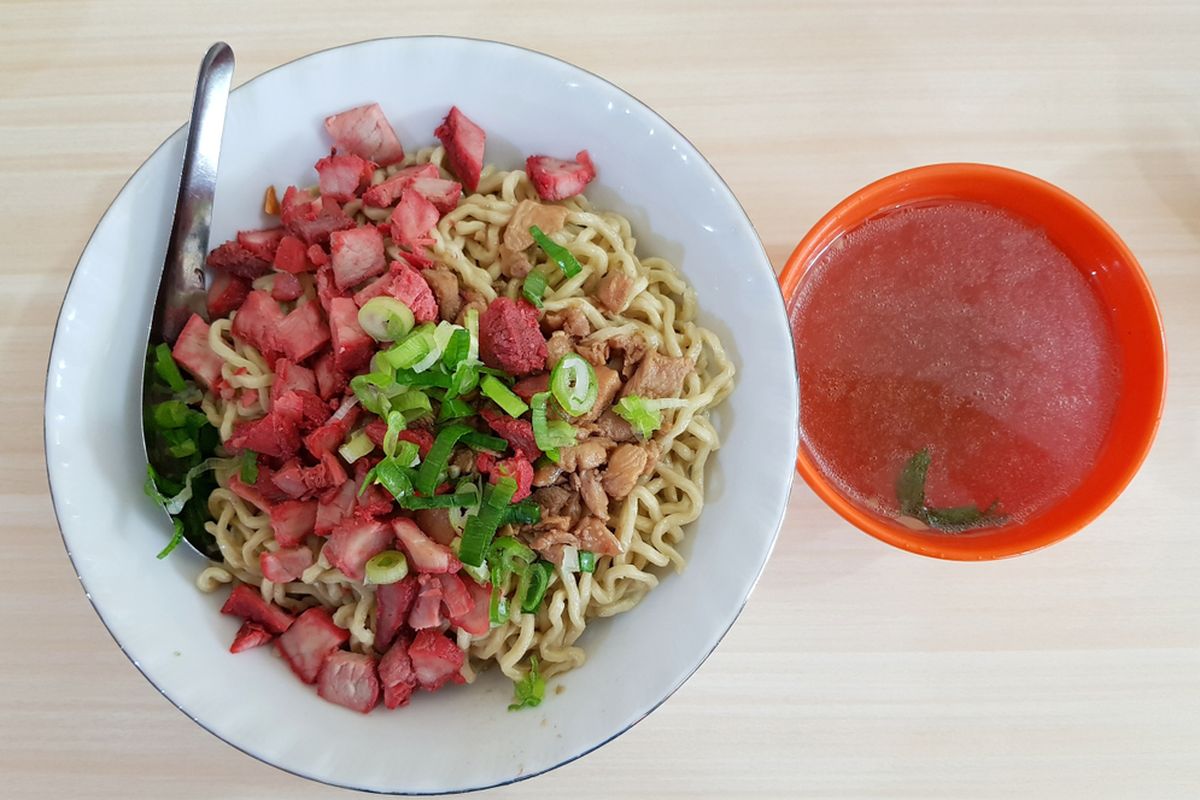
Bold and rich.
- stronger seasoning
- richer oil
- often pork or char siu
- generous portions
If Jakarta bakmi is subtle, Medan bakmi is loud.
Surabaya Bakmi
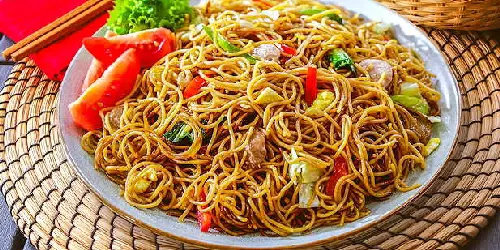
Leans slightly sweet.
- sweet soy sauce is noticeable
- chicken often caramelized
- softer noodles
If you like bakmi yamin, this style usually fits.
Bangka Bakmi
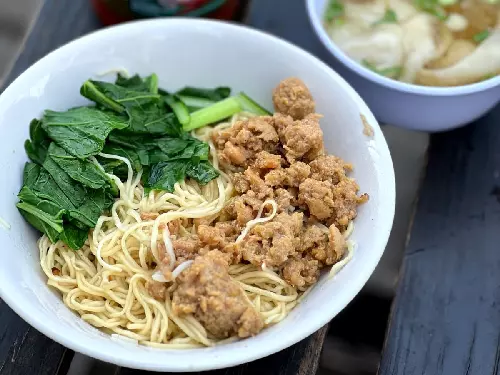
Very different from Jakarta style.
- clear pork broth
- less oil
- minced pork or fish topping
Light but very savory.
Bakmi Jawa
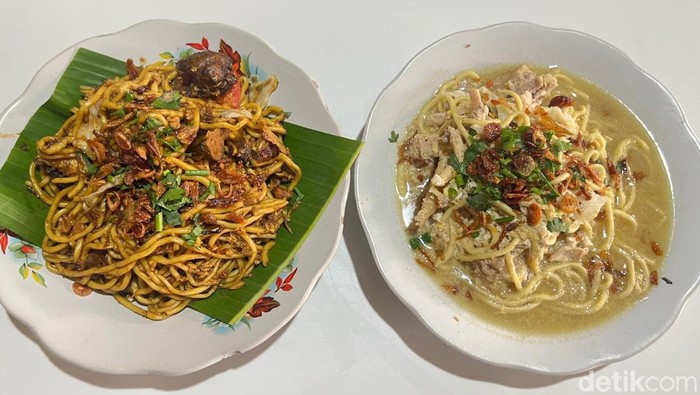
Fully localized.
- cooked over charcoal
- stir-fried or soupy
- thicker noodles
- smoky aroma
Feels more like home cooking than street food.
There’s no “best” bakmi style, only what you grew up with or what suits your taste.
Bakmi vs Other Noodles
Bakmi vs Mie Ayam
Relationship
- Bakmi is the broader category (the noodle dish).
- Mie ayam is a specific type of bakmi.
✅ All mie ayam is bakmi
❌ Not all bakmi is mie ayam
Key Differences
Think of it like this:
Bakmi = the base noodle style
Mie ayam = bakmi + chicken topping
Bakmi vs Ramen
Core Focus
- Ramen: Broth is the hero
- Bakmi: Noodles are the hero
Texture & Weight
Bakmi is often easier on the stomach, making it ideal for regular meals, while ramen is more indulgent.
Bakmi vs Chow Mein
Cooking Method
- Chow mein: Stir-fried in a wok
- Bakmi: Boiled → drained → tossed
Flavor Result
Because bakmi is not stir-fried, it feels lighter and less greasy, even when seasoned well.
Bakmi vs Kwetiau
Noodle Type
- Bakmi: Thin wheat egg noodles
- Kwetiau: Flat rice noodles
Taste & Texture
Quick Summary
- Bakmi = noodle-focused, light, versatile
- Mie ayam = a chicken-topped version of bakmi
- Ramen = broth-focused, rich
- Chow mein = stir-fried, bold
- Kwetiau = flat rice noodles, saucy
How to Order Bakmi Like a Local
Ordering bakmi is fast and casual. Don’t overthink it.
Step 1: Choose the Style
- Kering → dry (default)
- Kuah → with soup
Step 2: Choose the Topping
- ayam (chicken)
- babi (pork)
- pangsit (dumplings)
- bakso (meatballs)
You can combine them.
Step 3: Spice Level
- tidak
- sedikit
- pedas
Locals usually add chili themselves.
Step 4: Adjust at the Table
You’ll usually find chili, soy sauce, vinegar, and chili oil.
Taste first, then adjust.
Mie Tipis vs Mie Lebar
Some places will ask:
“Mie tipis atau mie lebar?”
Mie tipis is the default — light and springy.
Mie lebar is wider, chewier, and more filling.
Both are normal. Most people stick to one and never change 😄
Example orders:
- “Bakmi ayam kering, mie tipis.”
- “Bakmi ayam pangsit, mie lebar.”
Bakmi may look simple, but that’s exactly the point, it’s a dish shaped by history, habit, and everyday life in Indonesia.
[Author Name]
Lorem ipsum dolor sit amet, consectetur adipiscing elit. Suspendisse varius enim in eros elementum tristique. Duis cursus, mi quis viverra ornare, eros dolor interdum nulla, ut commodo diam libero vitae erat. Aenean faucibus nibh et justo cursus id rutrum lorem imperdiet. Nunc ut sem vitae risus tristique posuere.
Related Articles

Don’t miss any article from Curiothings
Lorem ipsum dolor sit amet consectetur adipiscing elit ut aliquam, purus sit amet luctus venenatis lectus magna fringilla urna.